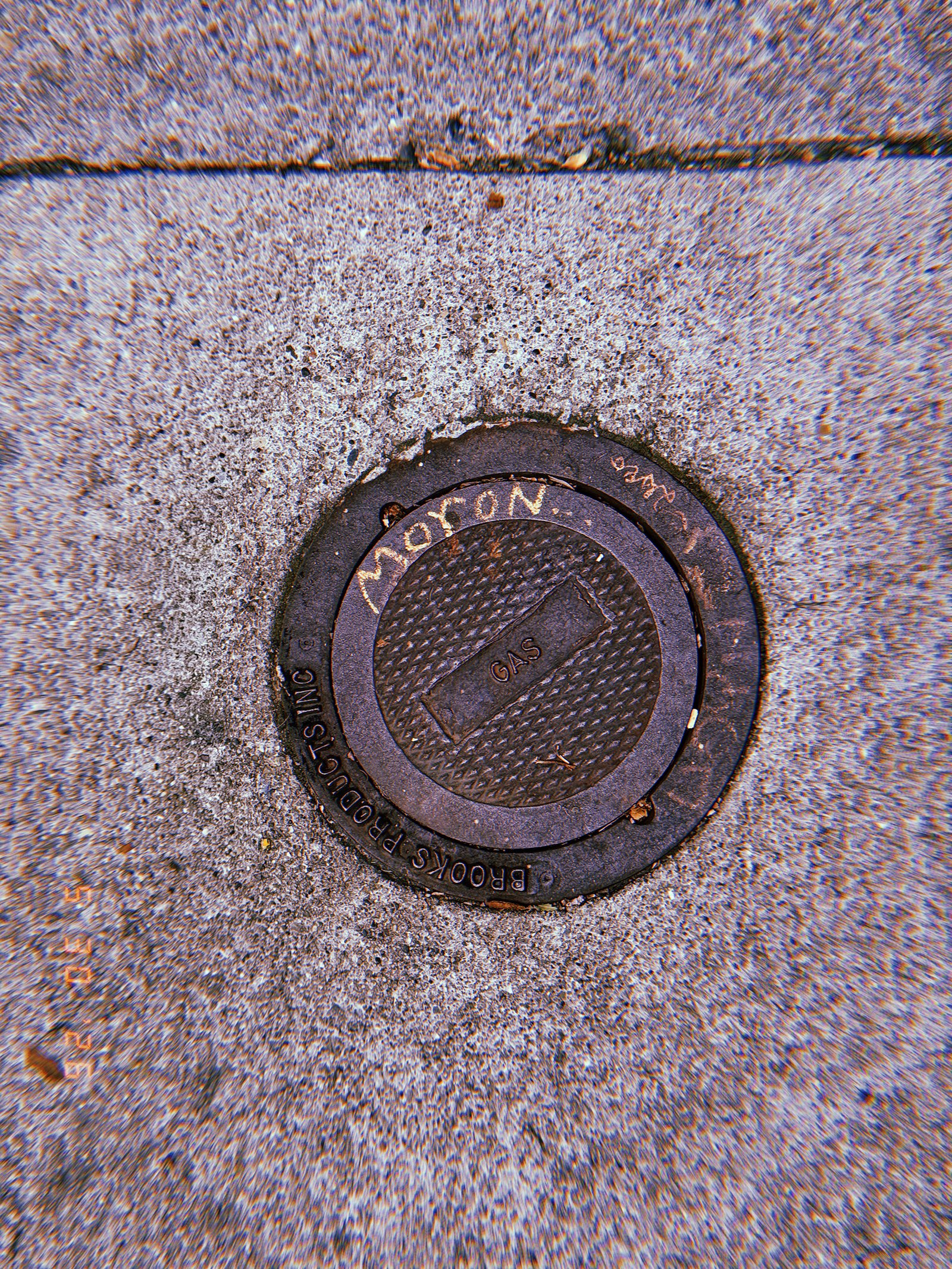

SF Modules – Set 035 – Tactile Warning Systems – 01
SF Modules — Set 035 “Tactile Warning Systems”.
A field of raised domes remains legible through accumulated wear, dirt, and repeated pedestrian contact.

SF Modules – Set 035 – Tactile Warning Systems – 02
SF Modules — Set 035 “Tactile Warning Systems”.
A repeated field of raised domes translates the edge of pedestrian space into a surface that can be felt underfoot.

SF Modules – Set 035 – Tactile Warning Systems – 03
SF Modules — Set 035 “Tactile Warning Systems”.
A worn tactile warning surface records use, damage, and repair while its repeated grid continues to define the pedestrian boundary.

SF Modules – Set 035 – Tactile Warning Systems – 04
SF Modules — Set 035 “Tactile Warning Systems”.
A dense grid of raised domes forms a tactile warning surface at the street edge. Repetition converts the pavement into a standardized field of physical information.

SF Modules – Set 035 – Tactile Warning Systems – 05
SF Modules — Set 035 “Tactile Warning Systems”.
A regular field of raised domes forms a tactile warning surface at the street edge. Dirt and debris accumulate within the standardized grid.

SF Modules – Set 035 – Tactile Warning Systems – 06
SF Modules — Set 035 “Tactile Warning Systems”.
Rows of raised domes form a tactile warning surface at the street edge. A shifting tree shadow temporarily disrupts the regular geometry of the standardized grid.

SF Modules – Set 035 – Tactile Warning Systems – 07
SF Modules — Set 035 “Tactile Warning Systems”.
Rows of raised domes form a standardized warning surface at the street edge. Missing elements, wear, and shadows interrupt the repeated grid.

SF Modules – Set 035 – Tactile Warning Systems – 08
SF Modules — Set 035 “Tactile Warning Systems”.
A grid of raised domes forms a tactile warning surface at the street edge. Wear, dirt, and debris accumulate across the standardized pattern.
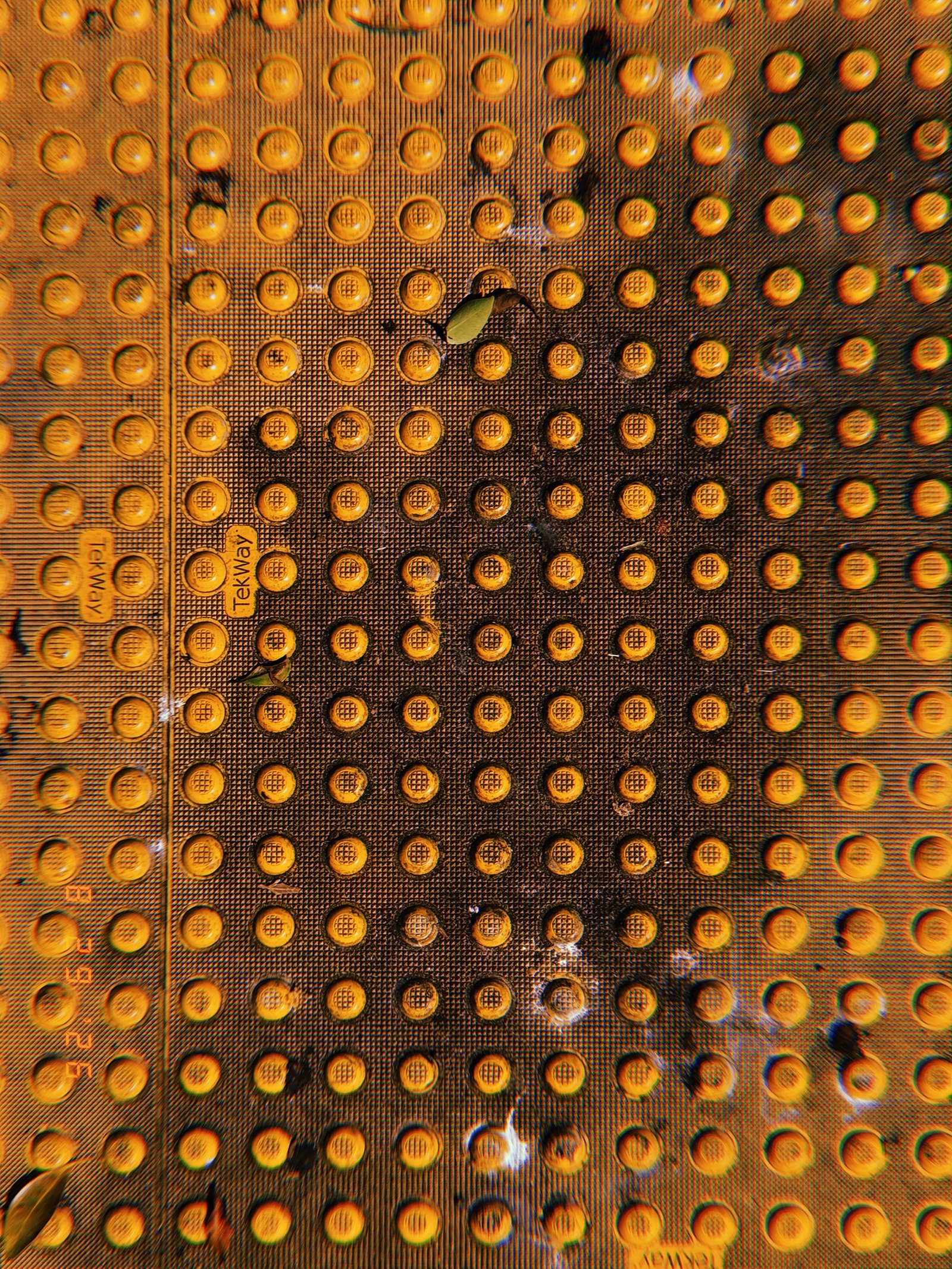
SF Modules – Set 035 – Tactile Warning Systems – 09
SF Modules — Set 035 “Tactile Warning Systems”.
A field of raised domes embedded in an orange curb ramp marks the transition between sidewalk and street. Repetition turns the walking surface into a tactile warning system.

SF Modules – Set 034 – Curb Instruction Systems – 01
SF Modules — Set 034 “Curb Instruction Systems”.
Black “TOW AWAY” lettering marks a white curb at the street edge. Painted language turns a physical boundary into an instruction regulating access and use.
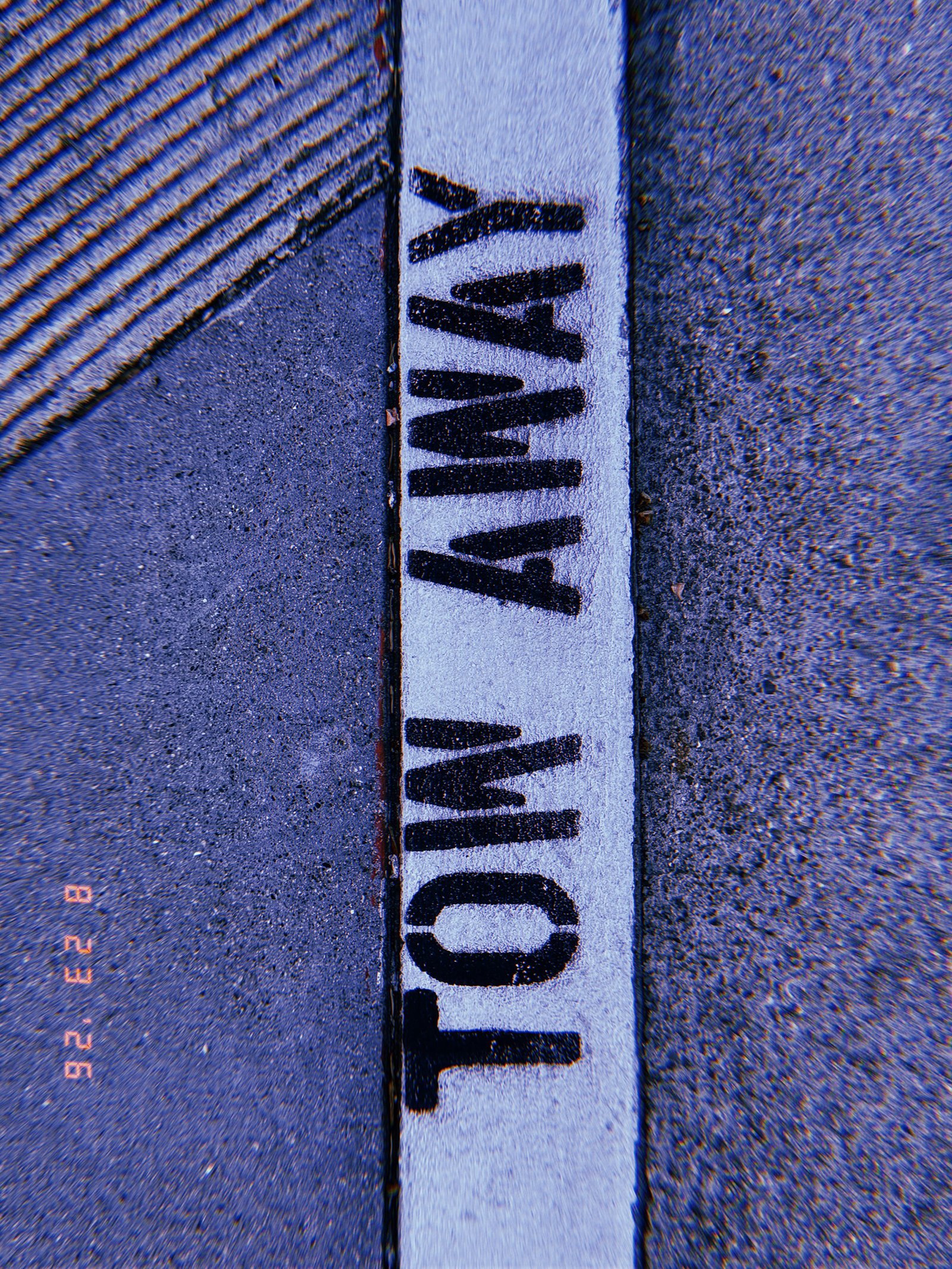
SF Modules – Set 034 – Curb Instruction Systems – 02
SF Modules — Set 034 “Curb Instruction Systems”.
Black “COMMERCIAL LOADING” lettering appears across a worn yellow curb. Text and color turn the street edge into a coded instruction for permitted use.
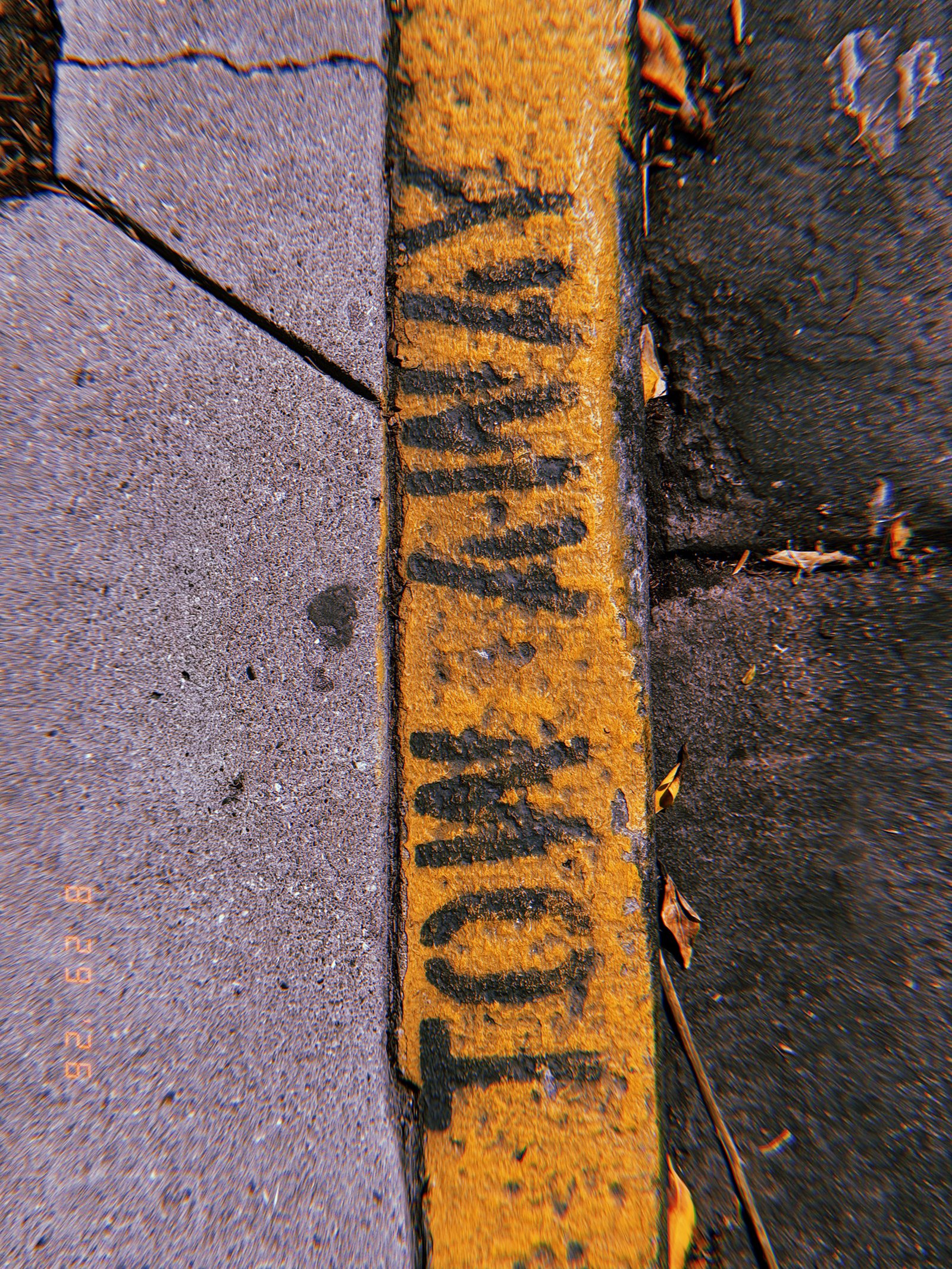
SF Modules – Set 034 – Curb Instruction Systems – 03
SF Modules — Set 034 “Curb Instruction Systems”.
Black “PASSENGER LOADING” lettering runs along a white curb. Regulatory language is integrated directly into the street edge, defining how the space can be used.
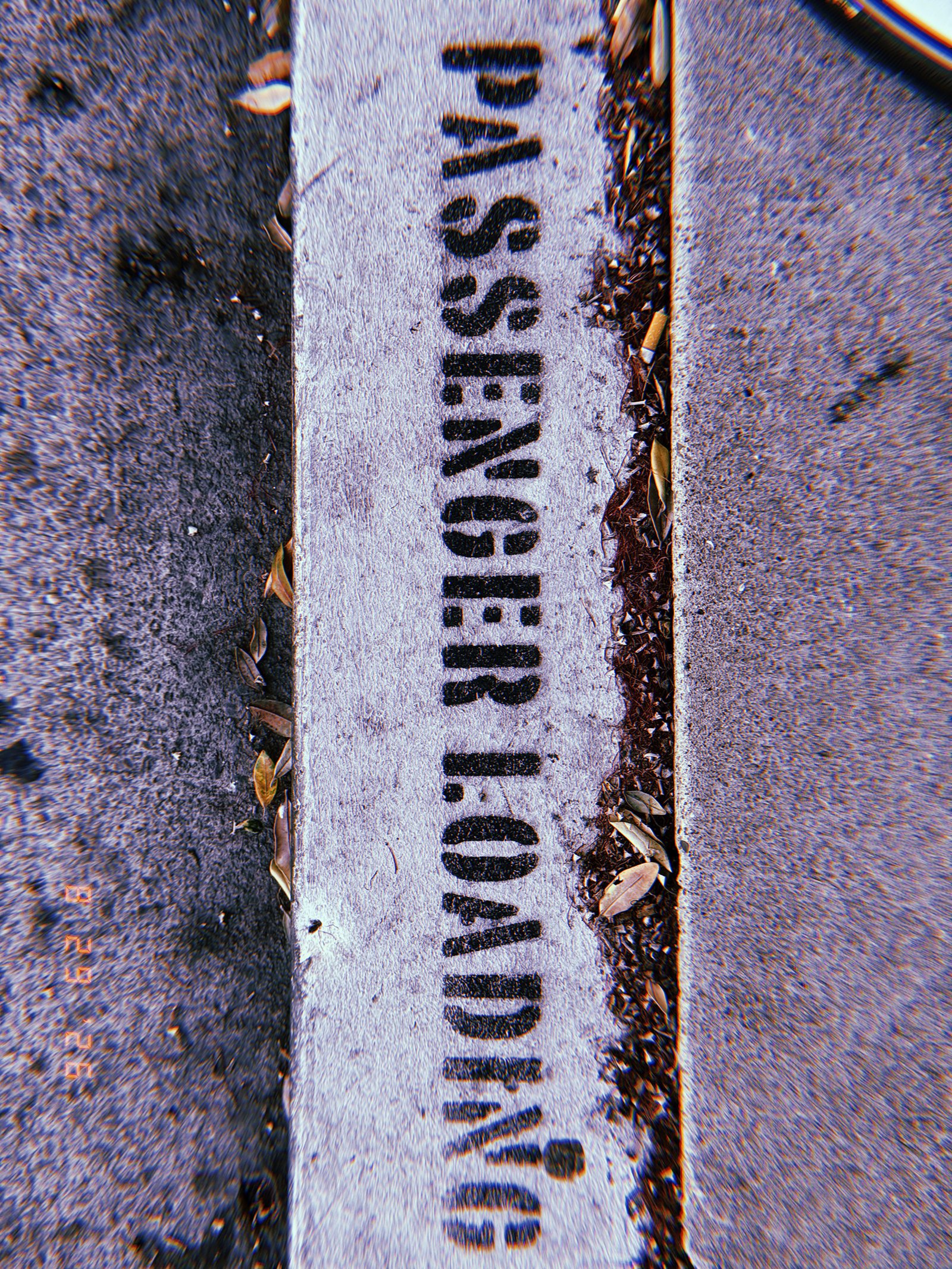
SF Modules – Set 034 – Curb Instruction Systems – 04
SF Modules — Set 034 “Curb Instruction Systems”.
Black “PASSENGER” lettering painted directly onto a worn white curb. The street edge carries a functional instruction, assigning use through text embedded in the urban surface.
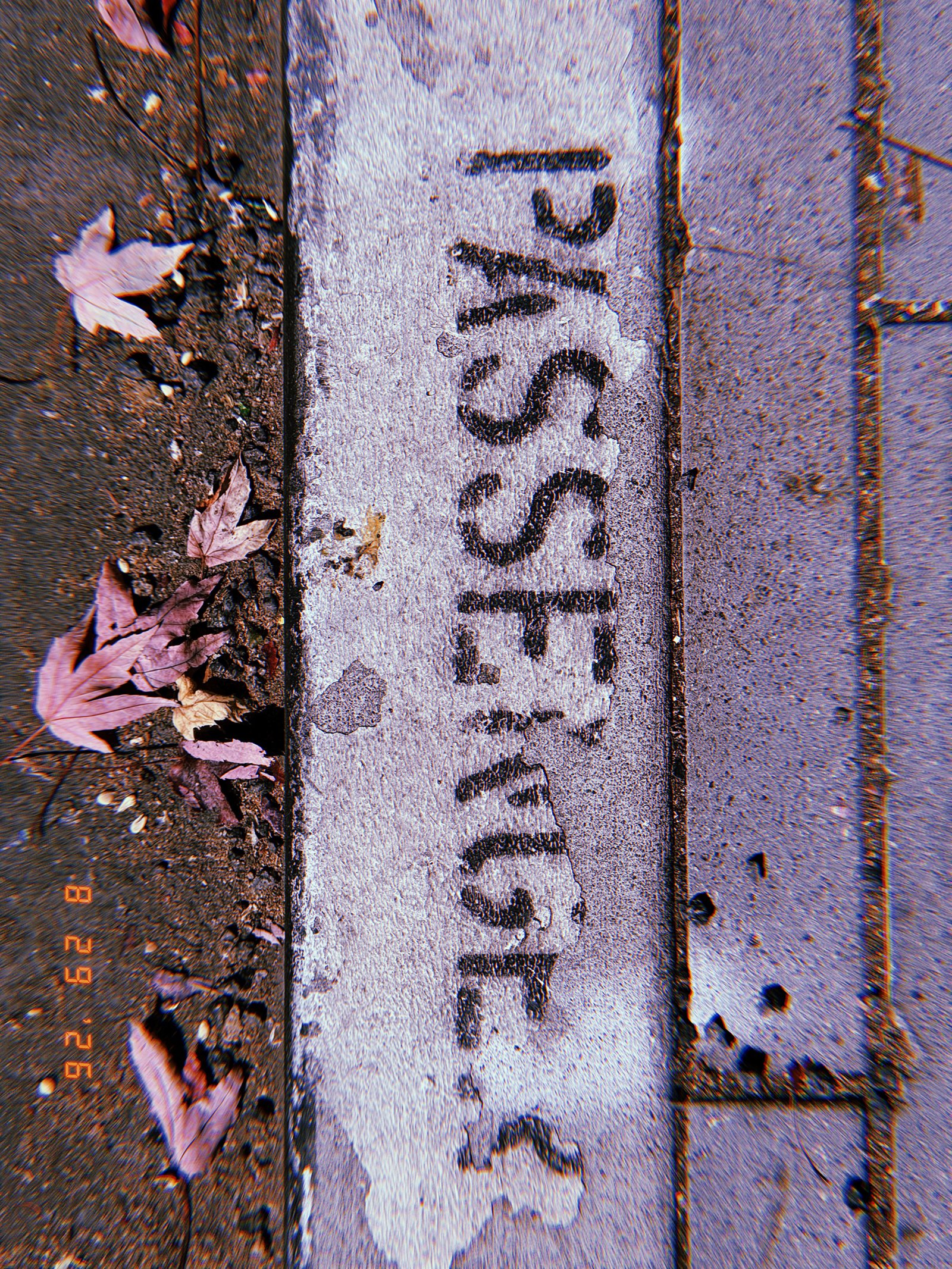
SF Modules – Set 034 – Curb Instruction Systems – 05
SF Modules — Set 034 “Curb Instruction Systems”.
Black “ALL TIMES” lettering remains on a worn white curb. Regulatory language is applied directly to the street surface, turning the curb into a permanent instruction.
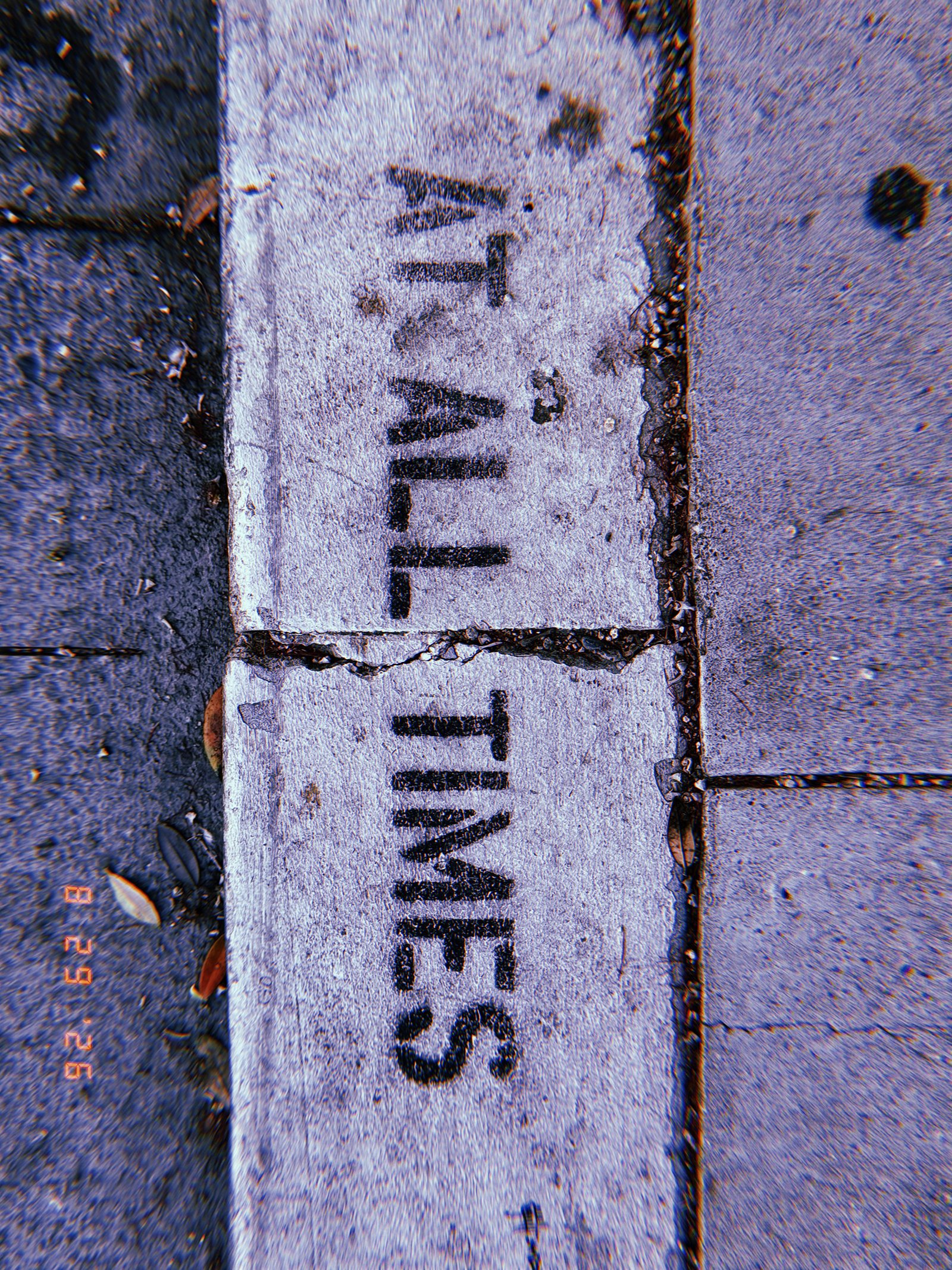
SF Modules – Set 034 – Curb Instruction Systems – 06
SF Modules — Set 034 “Curb Instruction Systems”.
Faded black markings remain on a deteriorating yellow curb. Repainting, wear, and partial erasure accumulate as layers of the city’s regulatory system.
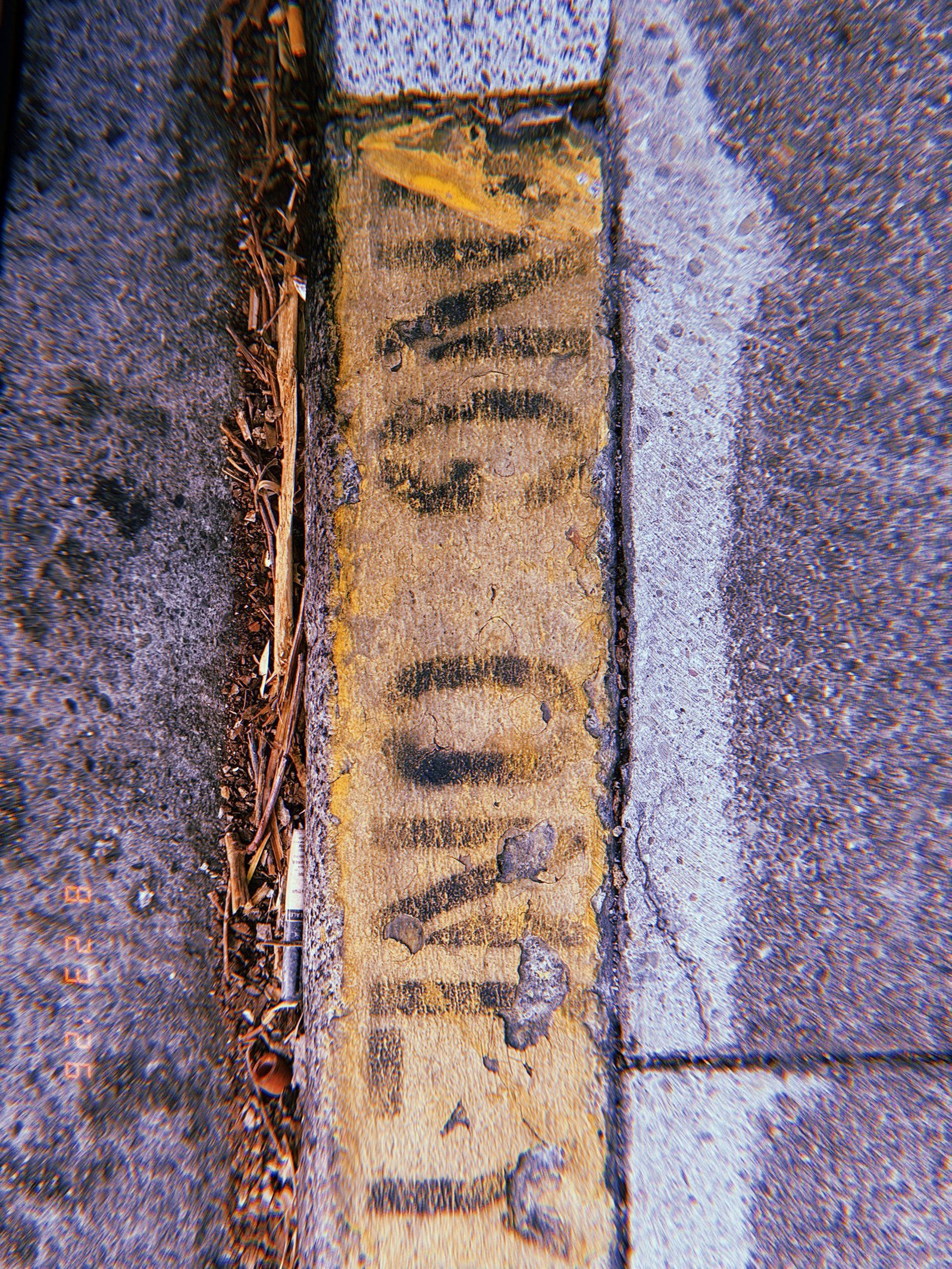
SF Modules – Set 034 – Curb Instruction Systems – 07
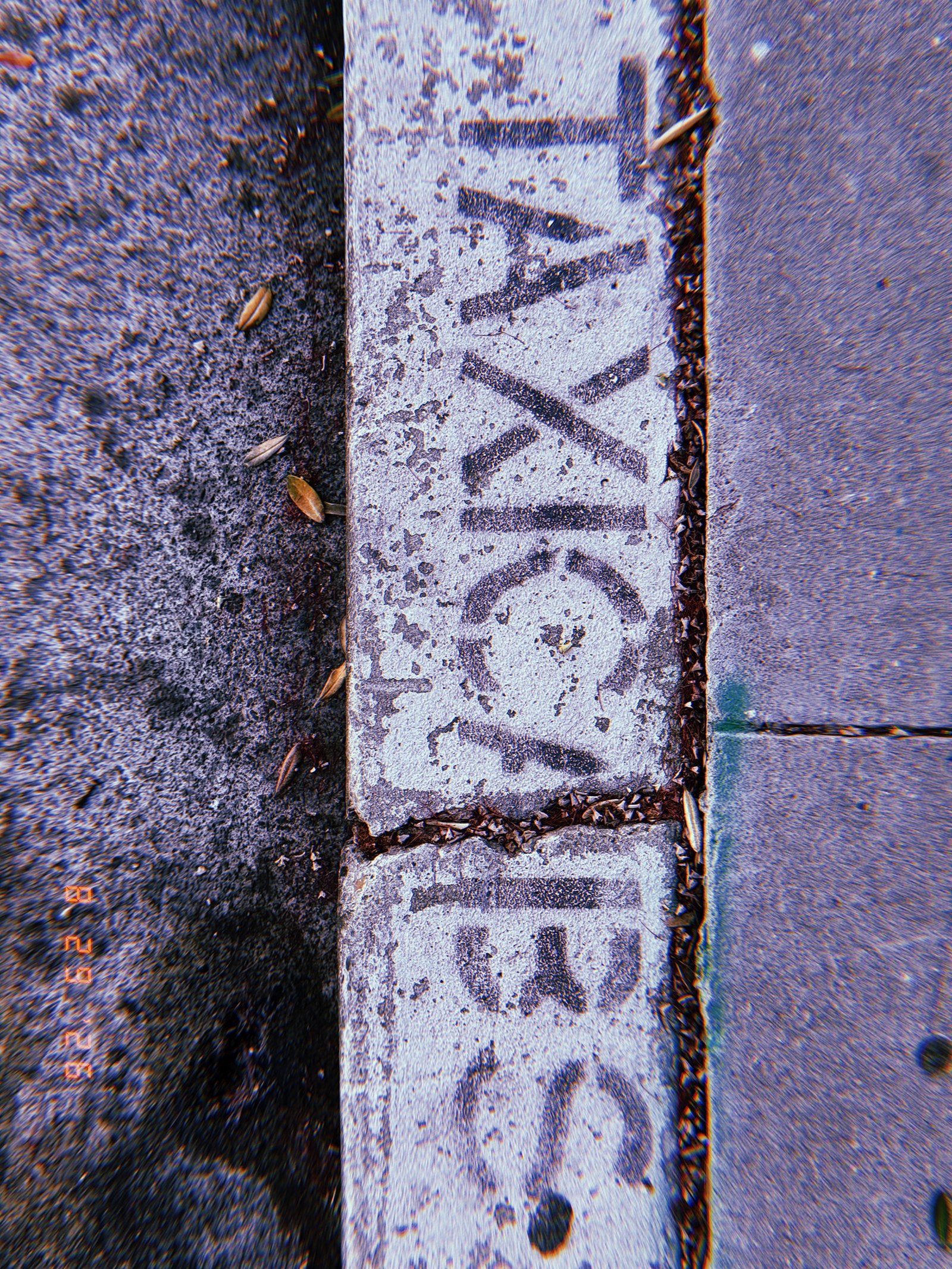
SF Modules — Set 034 “Curb Instruction Systems”.
Faded black “TAXI” and numerical markings remain on a worn white curb. The deteriorating text records an instruction that persists after its clarity begins to disappear.
SF Modules – Set 034 – Curb Instruction Systems – 08
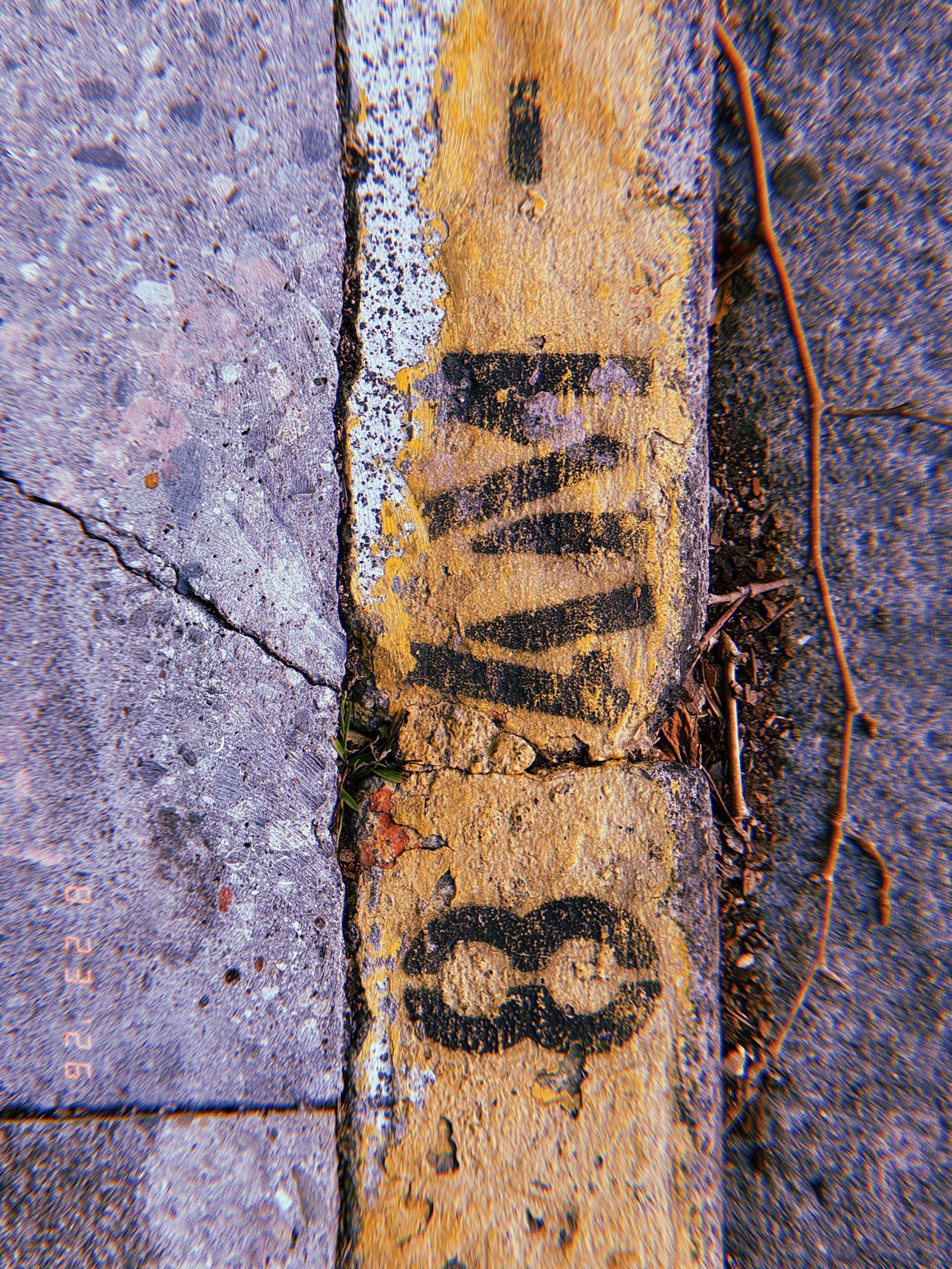
SF Modules — Set 034 “Curb Instruction Systems”.
Black coded markings painted over a worn yellow curb. Layers of color, text, and deterioration reveal the curb as a surface for repeated urban instructions.
SF Modules – Set 034 – Curb Instruction Systems – 09
SF Modules — Set 034 “Curb Instruction Systems”.
A black “NO POSTED” marking painted directly onto a white curb. Text embedded in the street surface turns the curb into an instructional layer of the city.

SF Modules – Set 033 – Bicycle Parking Systems – 01
SF Modules — Set 033 “Bicycle Parking Systems”.
A circular metal bicycle rack fixed to the sidewalk provides a designated point for securing bicycles within San Francisco’s street infrastructure. Positioned along the curb, its standardized geometric form becomes a small but permanent component of the city’s system for organizing bicycle parking within public space.
SF Modules – Set 033 – Bicycle Parking Systems – 02
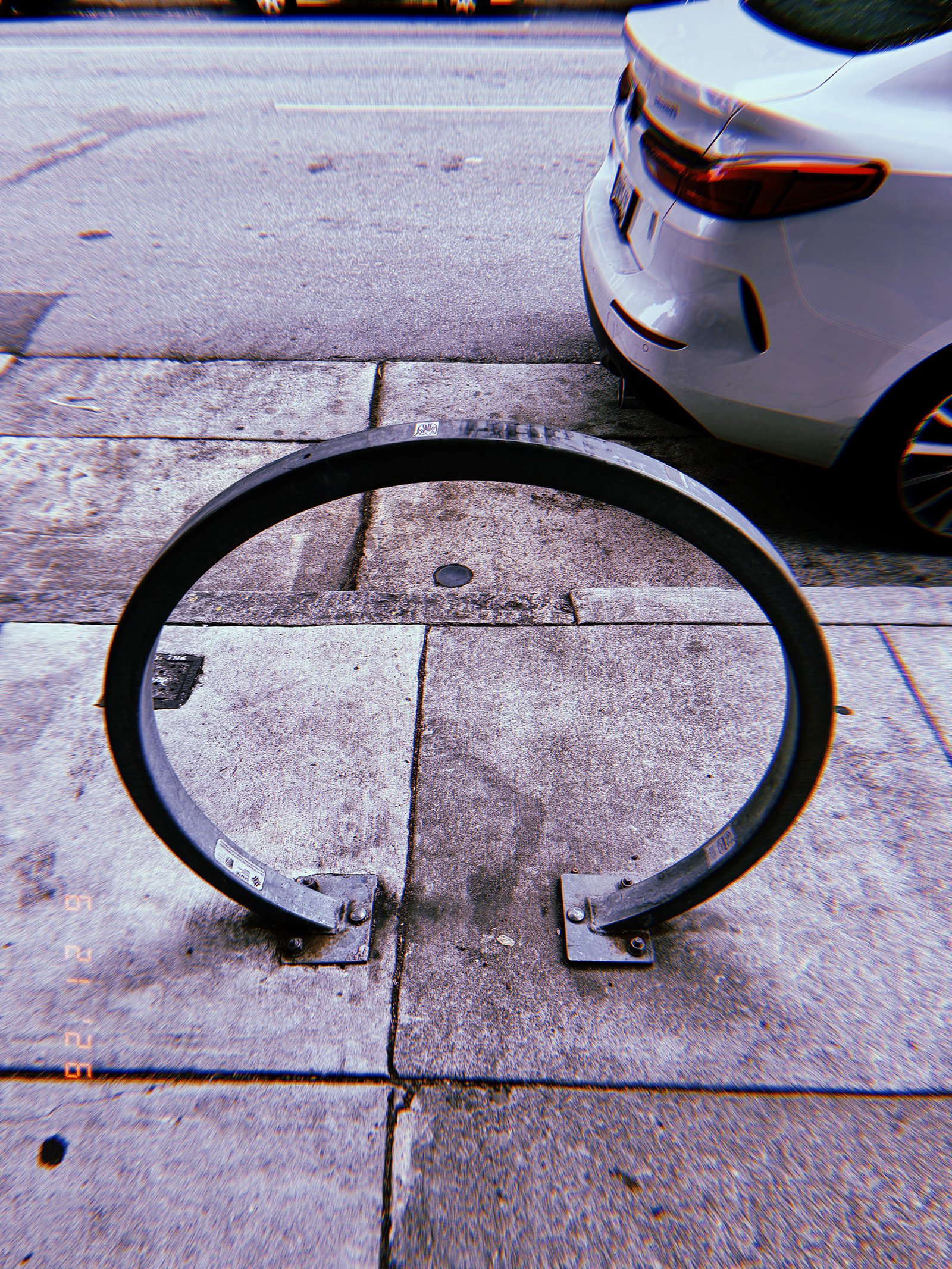
SF Modules — Set 033 “Bicycle Parking Systems”.
A circular metal bicycle rack fixed to the sidewalk provides a designated point for securing bicycles within San Francisco’s street infrastructure. Its worn surface and standardized geometric form contrast with the parked vehicle behind it, placing bicycle and automobile systems within the same curbside space.
SF Modules – Set 033 – Bicycle Parking Systems – 03
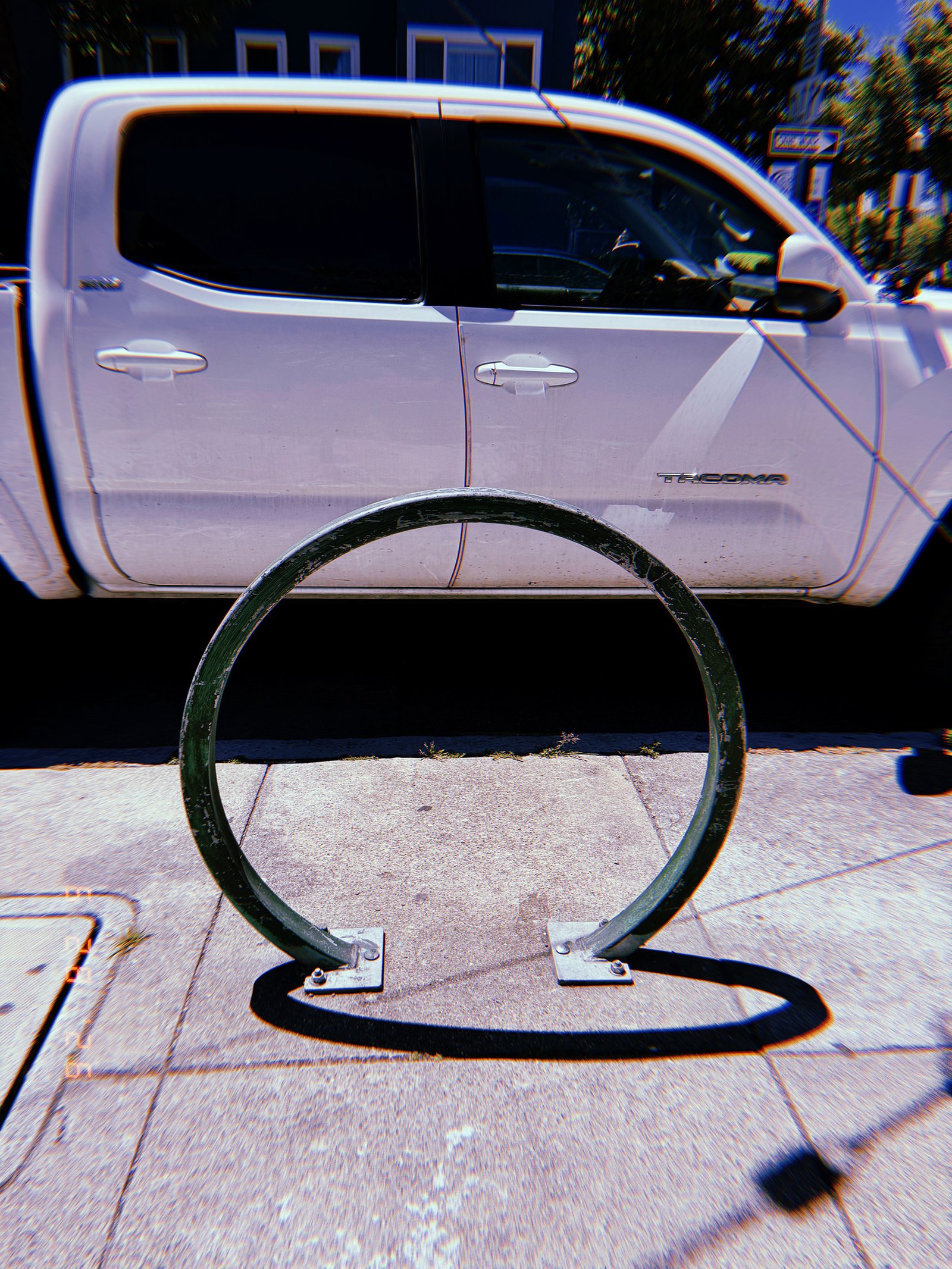
SF Modules — Set 033 “Bicycle Parking Systems”.
A circular metal bicycle rack fixed to the sidewalk provides a designated point for securing bicycles within San Francisco’s street infrastructure. Positioned directly beside the curb, its geometric form visually overlaps with the wheel of a parked vehicle, connecting bicycle and automobile systems within the same streetscape.
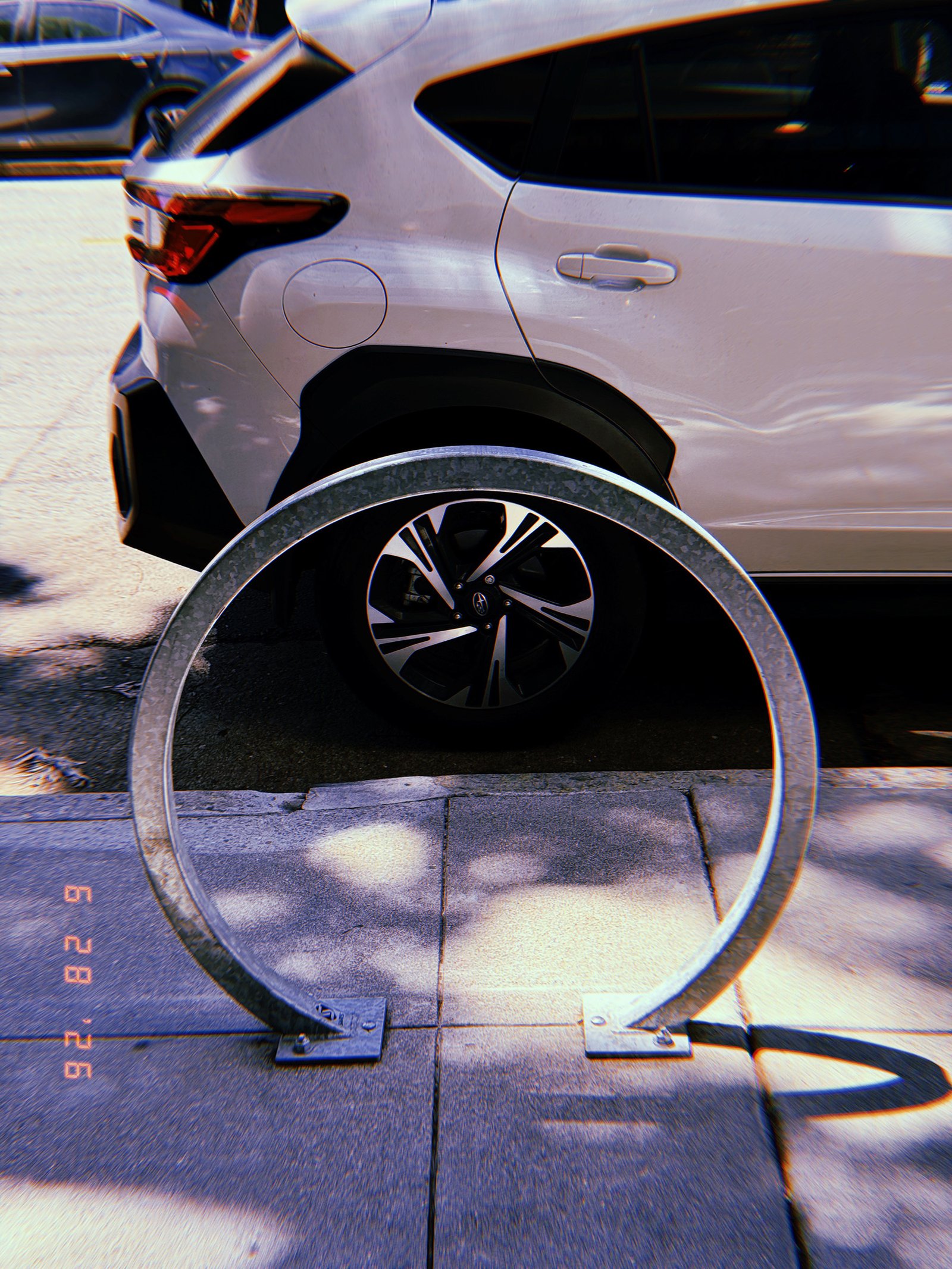
SF Modules – Set 033 – Bicycle Parking Systems – 04
SF Modules — Set 033 “Bicycle Parking Systems”.
A circular metal bicycle rack fixed to the sidewalk provides a designated point for securing bicycles within San Francisco’s street infrastructure. The standardized geometric form occupies the transition between sidewalk and roadway, surrounded by curb markings, pavement lines, and shifting tree shadows.
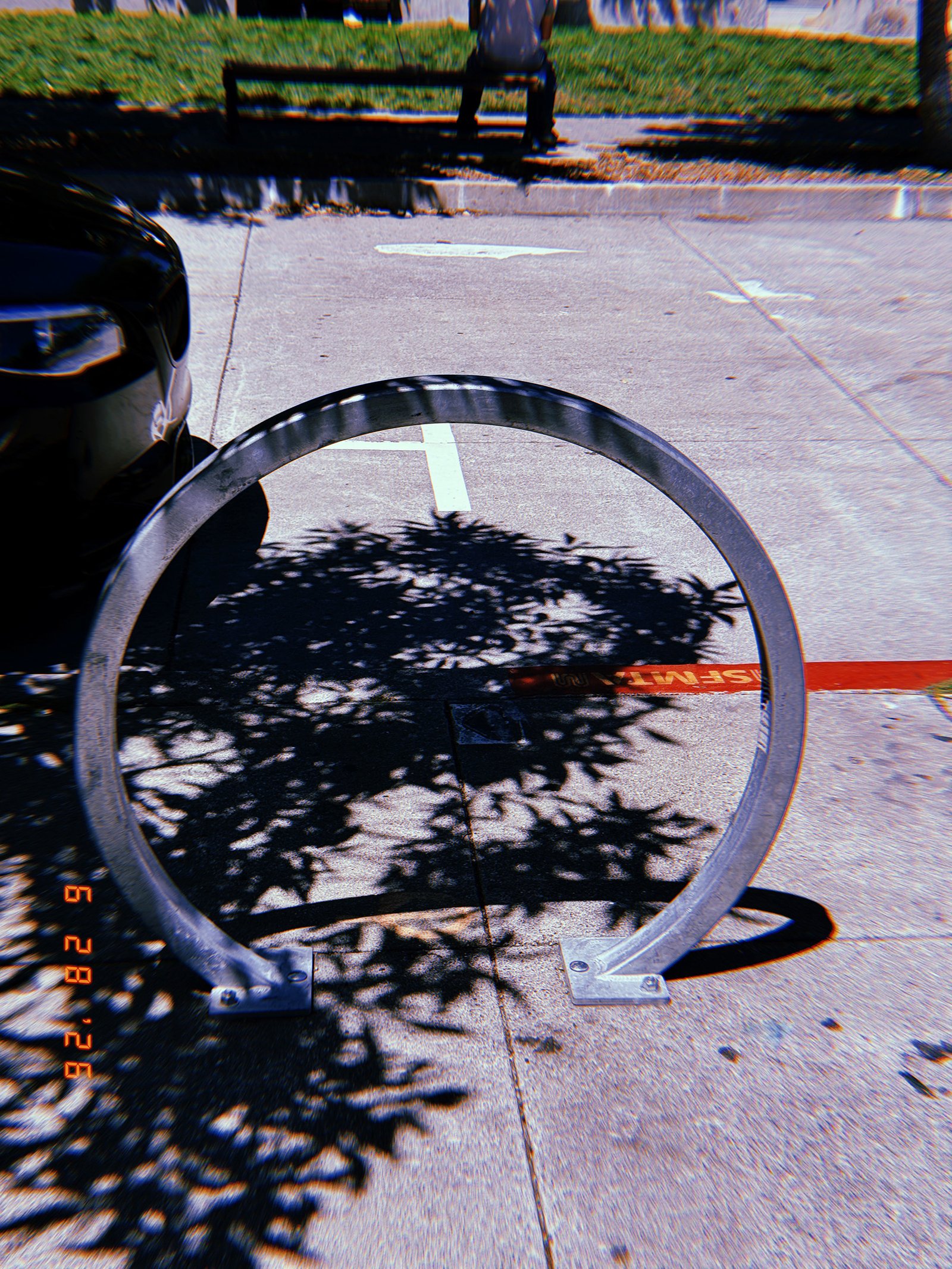
SF Modules – Set 033 – Bicycle Parking Systems – 05
SF Modules — Set 033 “Bicycle Parking Systems”.
A circular metal bicycle rack fixed to the sidewalk provides a designated point for securing bicycles within San Francisco’s street infrastructure. Scratched green paint and exposed metal record repeated use while the standardized form remains integrated into the curbside environment.
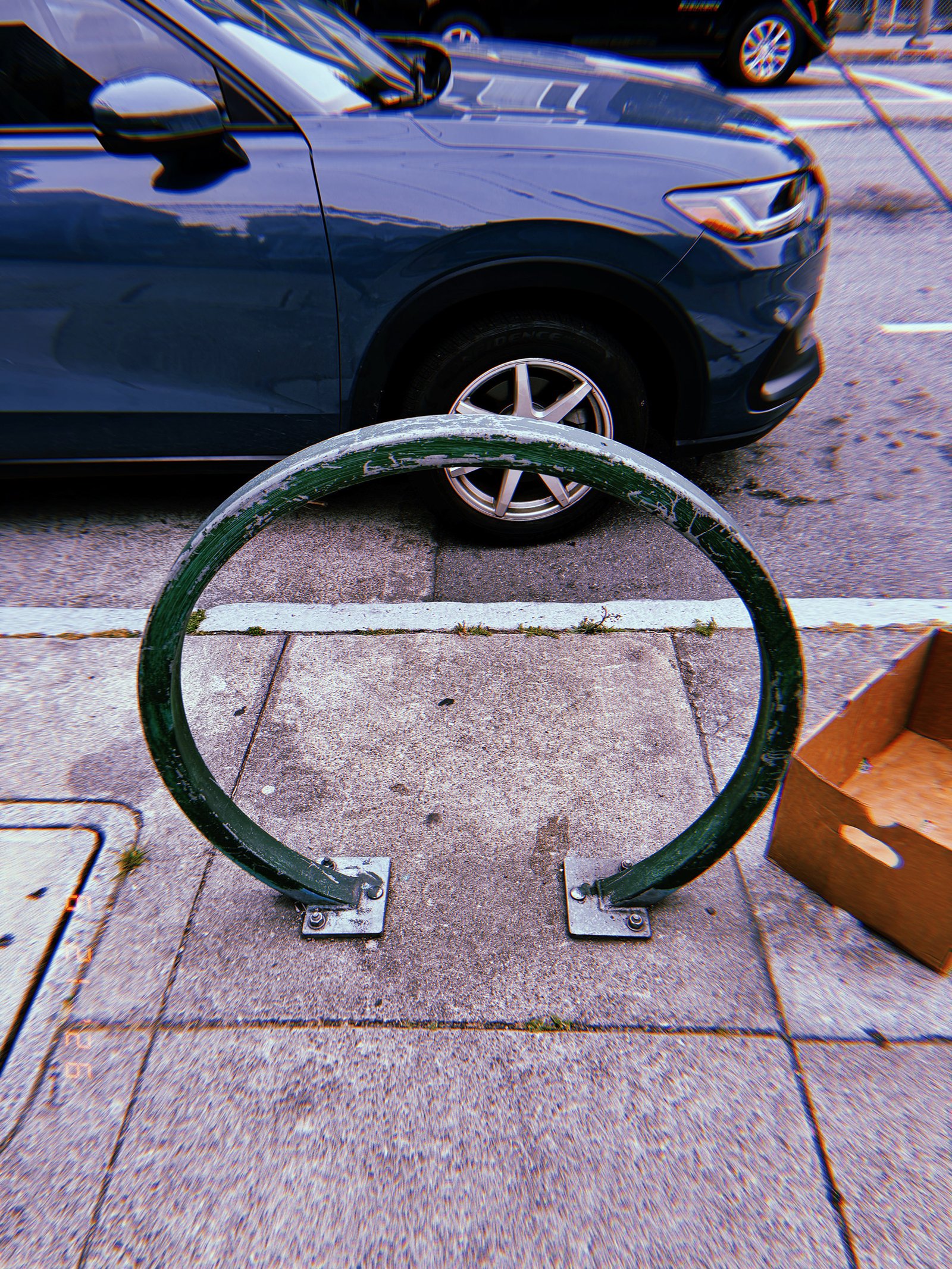
SF Modules – Set 033 – Bicycle Parking Systems – 06
SF Modules — Set 033 “Bicycle Parking Systems”.
A circular metal bicycle rack fixed to the sidewalk creates a designated point for securing bicycles within San Francisco’s street infrastructure. Its geometric form sits directly beside the curb, integrated into the narrow zone between pedestrian and vehicle space.

SF Modules – Set 033 – Bicycle Parking Systems – 07
SF Modules — Set 033 “Bicycle Parking Systems”.
A circular metal bicycle rack fixed to the sidewalk defines a designated point for bicycle parking within San Francisco’s streetscape. Its standardized form sits between pedestrian space, curb regulation, and the surrounding street infrastructure.
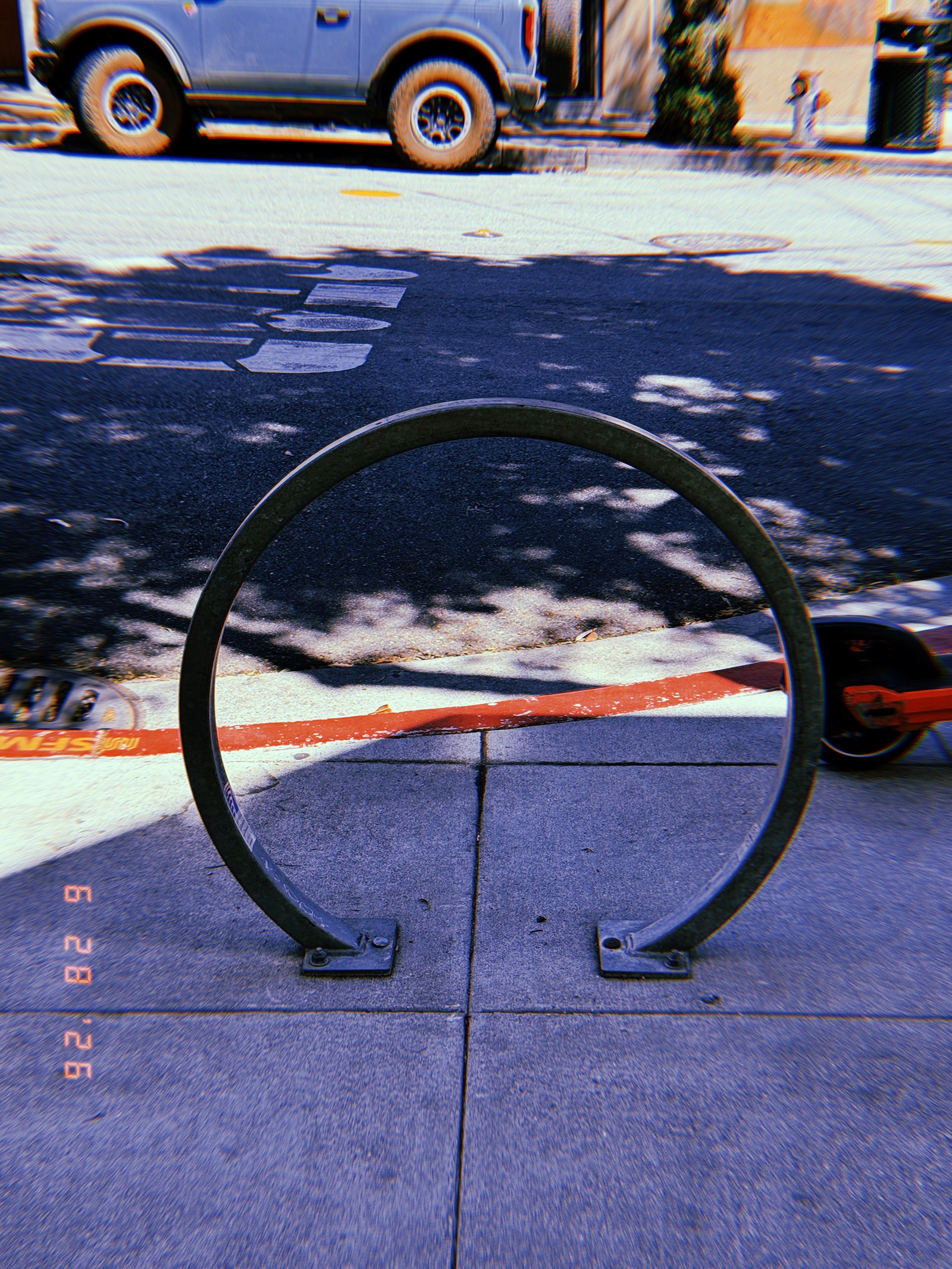
SF Modules – Set 033 – Bicycle Parking Systems – 08
SF Modules — Set 033 “Bicycle Parking Systems”.
A circular metal bicycle rack fixed to the sidewalk forms part of San Francisco’s distributed bicycle parking infrastructure. Its simple standardized structure creates a designated point for securing bicycles within the existing streetscape.
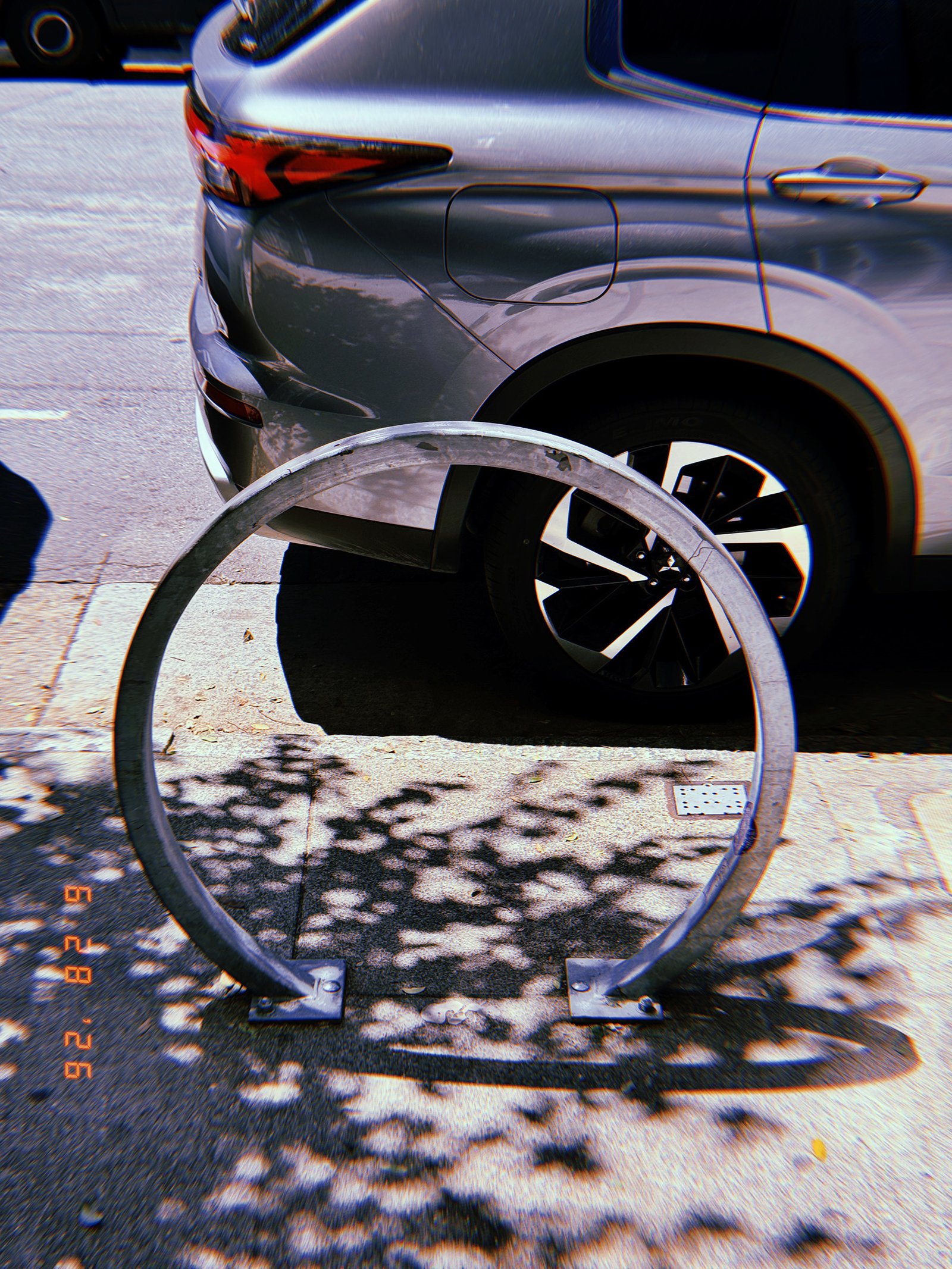
SF Modules – Set 033 – Bicycle Parking Systems – 09
SF Modules — Set 033 “Bicycle Parking Systems”.
A circular metal bicycle rack installed on a San Francisco sidewalk forms part of the city’s distributed bicycle parking infrastructure, defining a small designated point for securing bicycles within the streetscape.

SF Modules – Set 032 – Gas Valve Systems – 01
SF Modules — Set 032 “Gas Valve Systems”.
A circular gas utility cover embedded in the sidewalk marks a small access point to San Francisco’s underground gas distribution system, surrounded by everyday traces of the street.

SF Modules – Set 032 – Gas Valve Systems – 02
SF Modules — Set 032 “Gas Valve Systems”.
A circular PG&E gas cover embedded in the sidewalk marks a small access point to San Francisco’s underground gas distribution system, integrated almost seamlessly into the surrounding pavement.
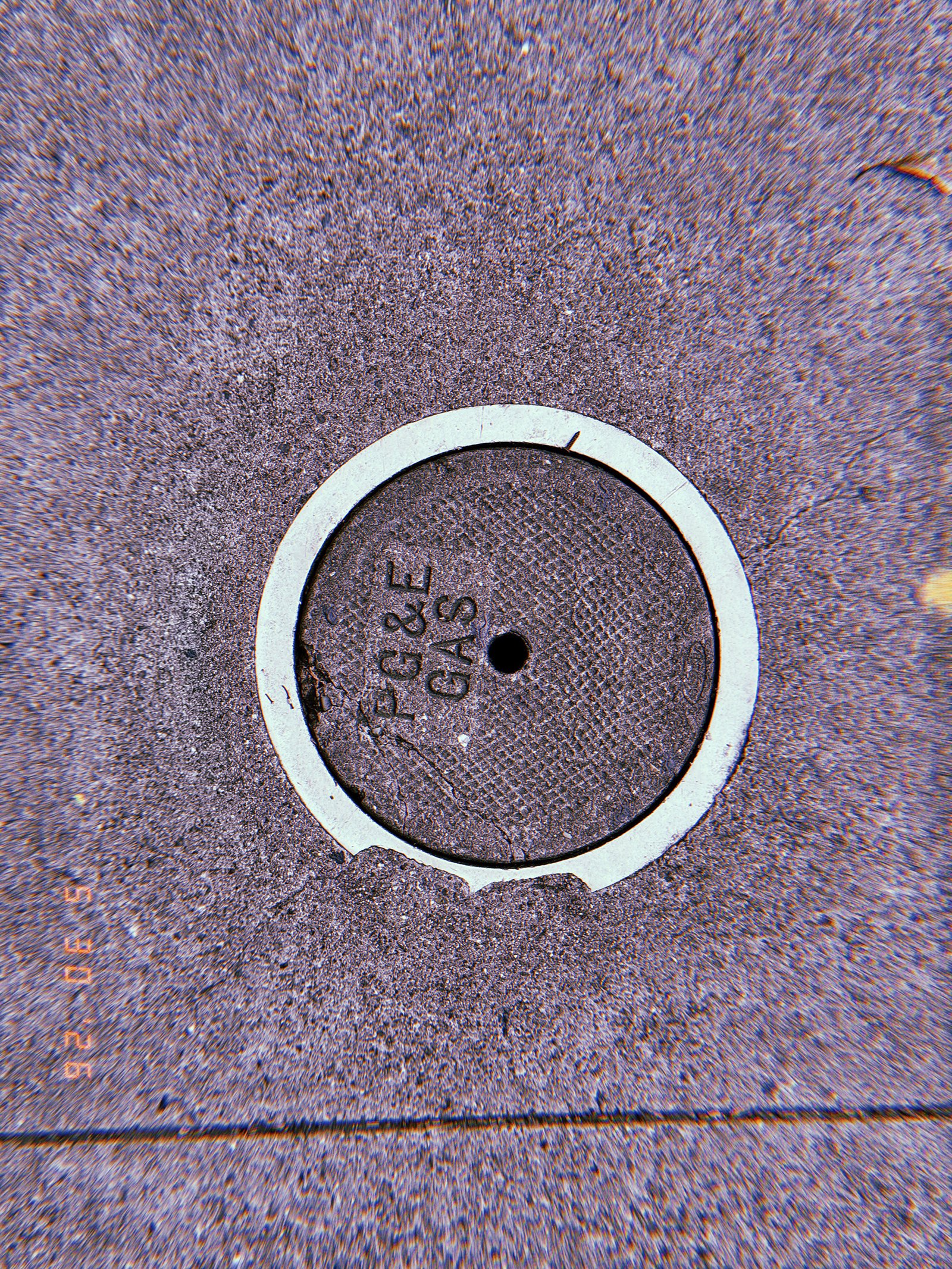
SF Modules – Set 032 – Gas Valve Systems – 03
SF Modules — Set 032 “Gas Valve Systems”.
A circular metal valve cover embedded in the sidewalk marks a direct access point to San Francisco’s underground gas distribution system, its functional labeling integrated into the surface of the street.
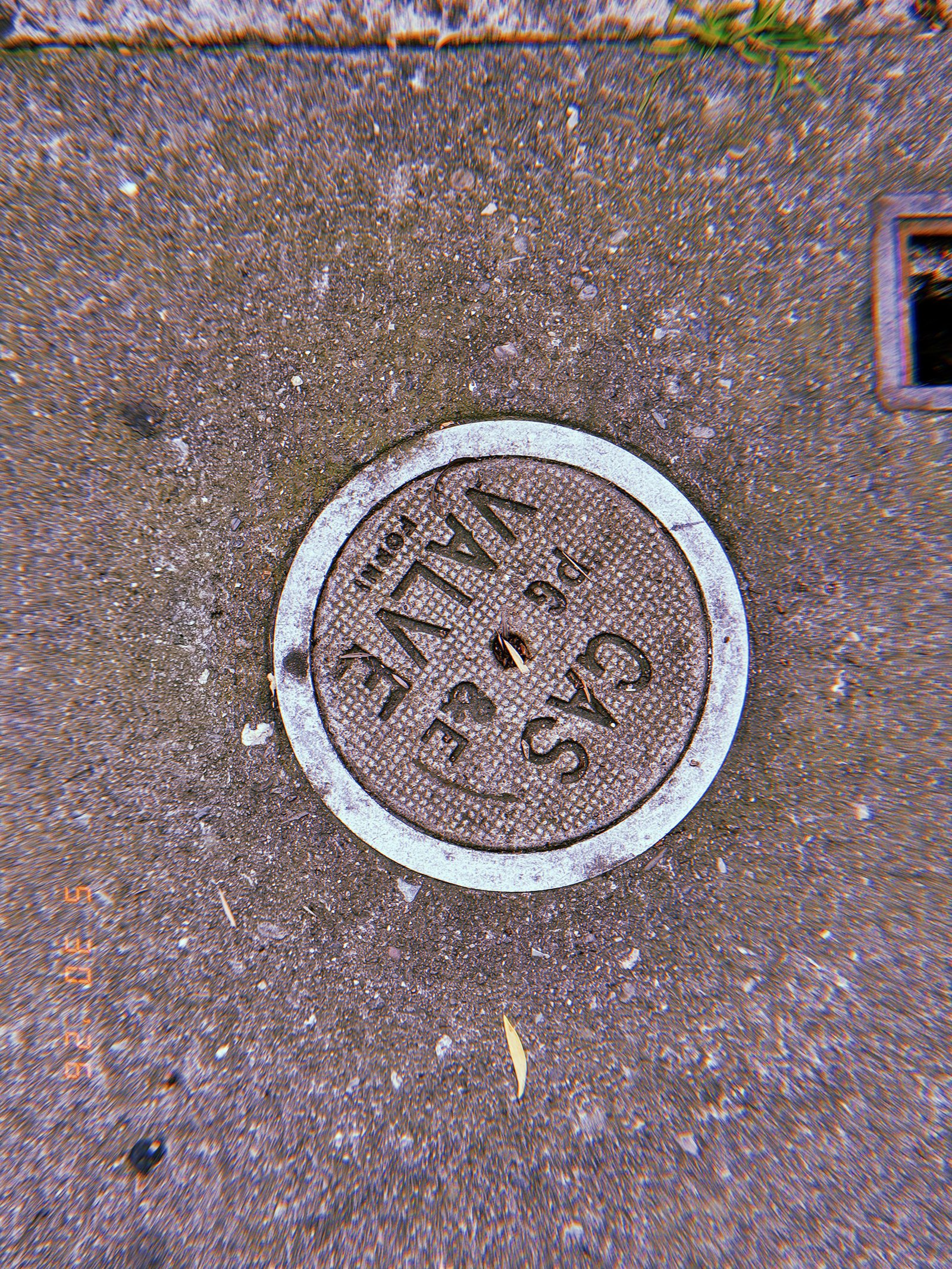
SF Modules – Set 032 – Gas Valve Systems – 04
SF Modules — Set 032 “Gas Valve Systems”.
A circular gas utility cover embedded in the sidewalk forms a visible access point to San Francisco’s underground gas distribution infrastructure, surrounded by pavement markings and traces of maintenance.
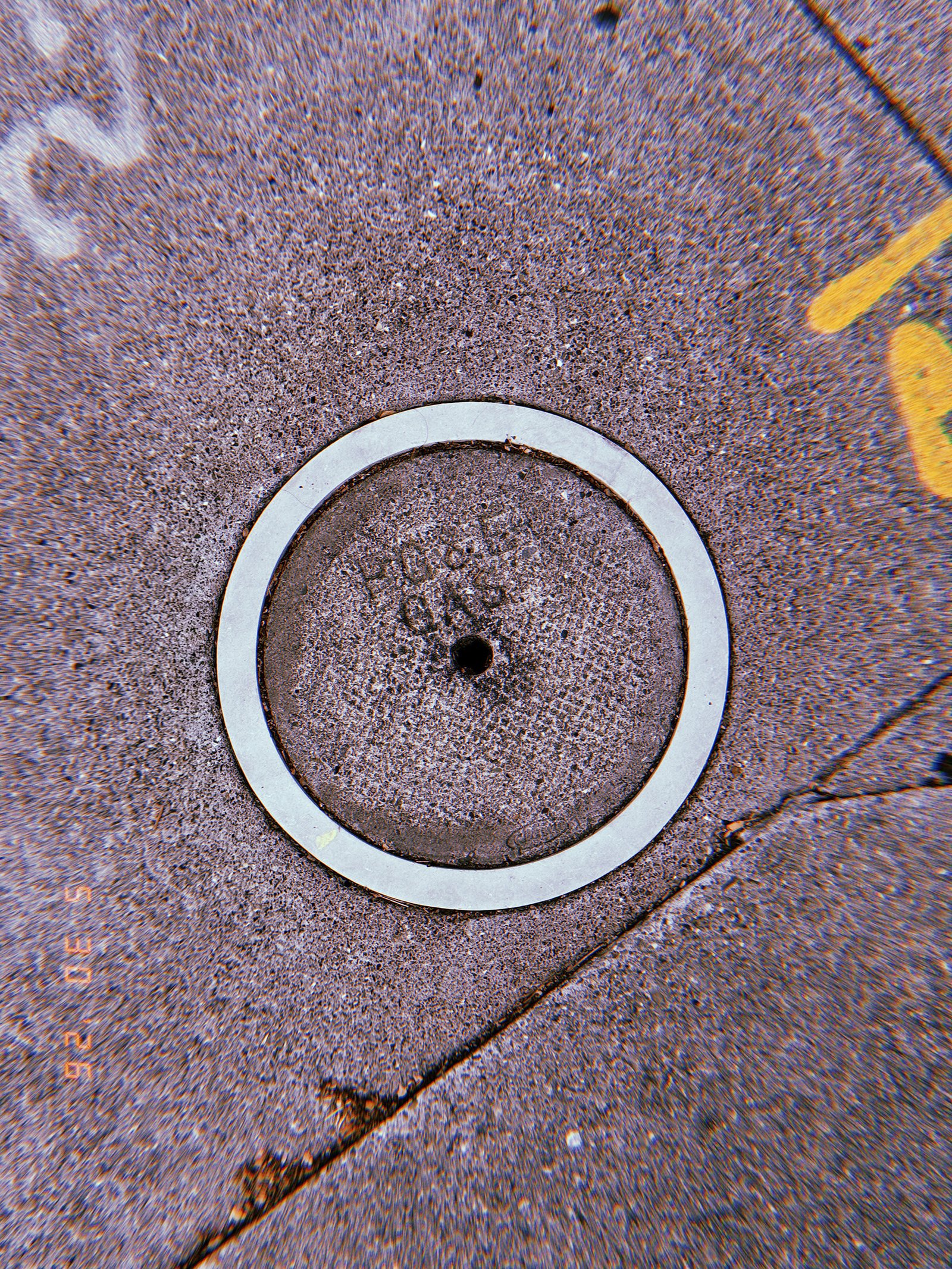
SF Modules – Set 032 – Gas Valve Systems – 05
SF Modules — Set 032 “Gas Valve Systems”.
A partially filled circular utility access point remains visible within the sidewalk, revealing another variation in San Francisco’s underground gas infrastructure.
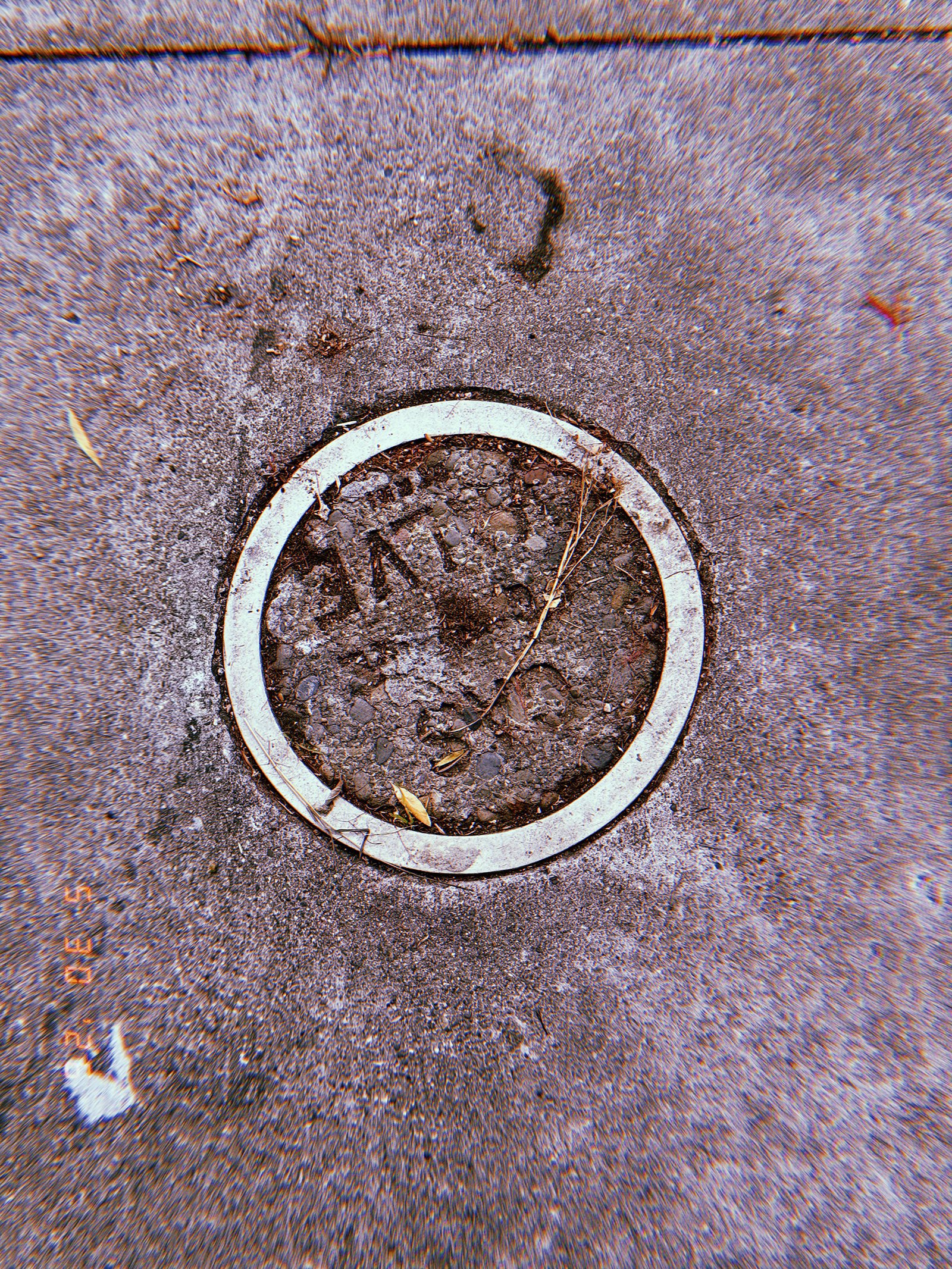
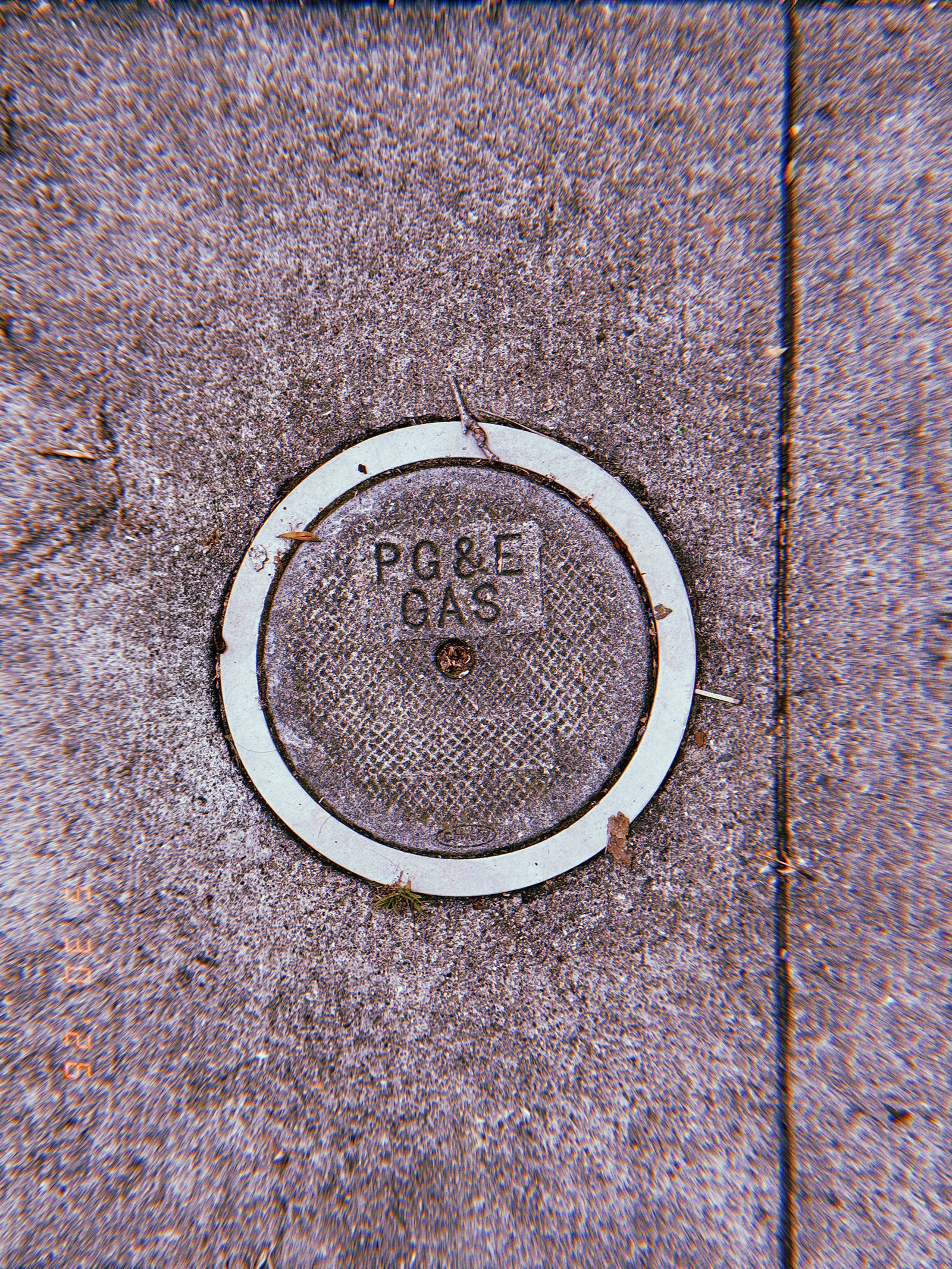
SF Modules – Set 032 – Gas Valve Systems – 06
SF Modules — Set 032 “Gas Valve Systems”.
A circular PG&E gas cover set into the sidewalk identifies a small access point to San Francisco’s underground gas distribution infrastructure.
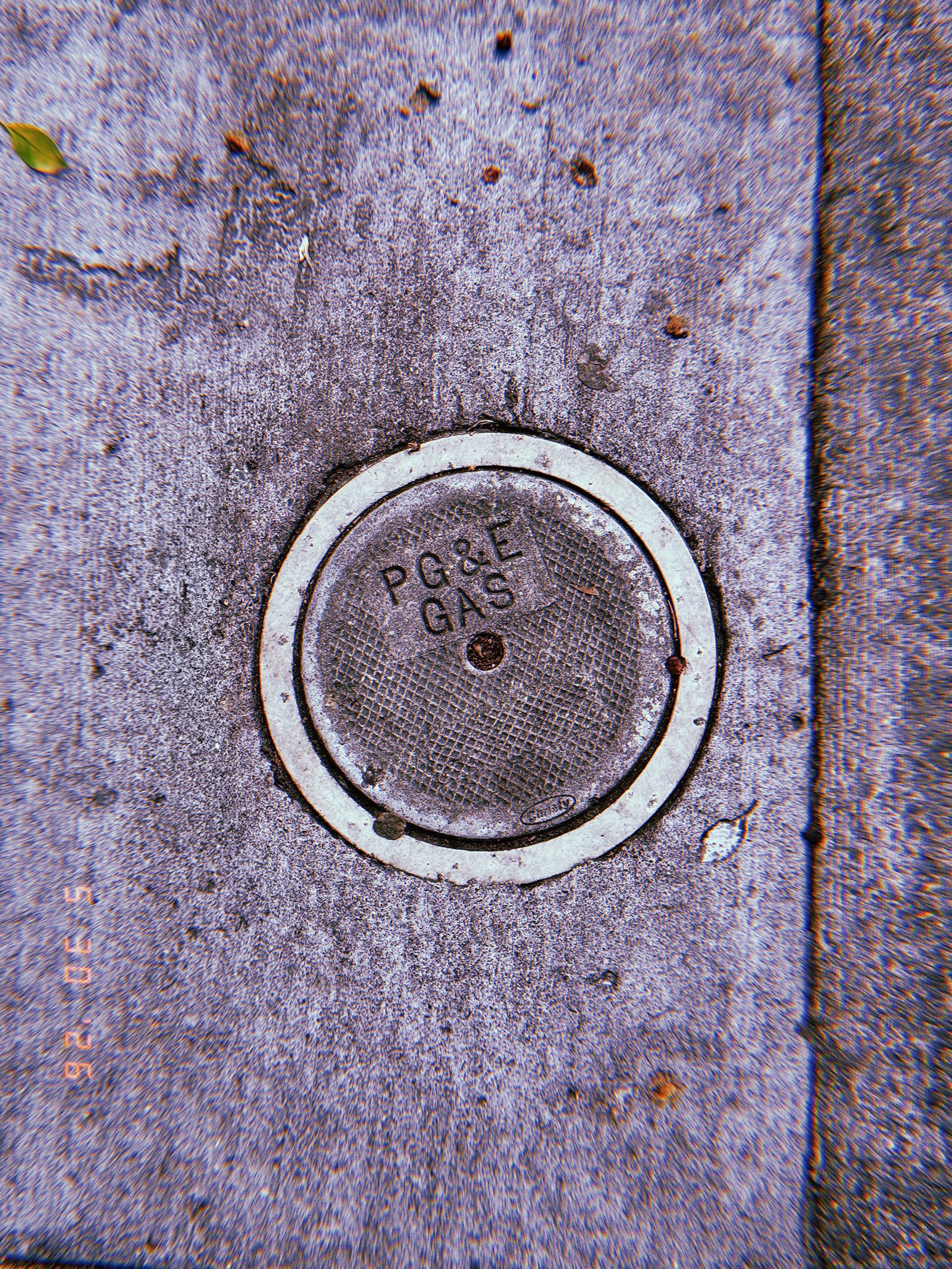
SF Modules – Set 032 – Gas Valve Systems – 07
SF Modules — Set 032 “Gas Valve Systems”.
A circular PG&E gas cover embedded directly into the sidewalk marks a small access point to San Francisco’s underground gas distribution system.
SF Modules – Set 032 – Gas Valve Systems – 08
SF Modules — Set 032 “Gas Valve Systems”.
A small circular gas valve cover embedded in the sidewalk documents a discreet access point to San Francisco’s underground gas distribution infrastructure.

SF Modules – Set 032 – Gas Valve Systems – 09
SF Modules — Set 032 “Gas Valve Systems”.
A circular gas utility valve cover embedded in the sidewalk documents the access points of San Francisco’s underground gas distribution infrastructure.